In Thailand, the police force crime suspects to go through all the motions of their alleged crimes — robberies, murders, even rapes —while the cameras roll
Two Notorious Re-enactments
The re-enactments are so much like theatre that actors are often hired to play the victims. A long-running debate over their fairness and usefulness was reignited after the Erawan Shrine bombings of 17 August 2015. The suspects had to retrace their steps with armed commandoes, senior police officers, and throngs of media in tow.
The public watched on live television, social media and from the sidelines as police escorted Yusufu Mierili and another Uyghur man around the shrine and other sites they say were connected to the attack. Officers dressed them in flak jackets.
“We were afraid he might get shot,” national police spokesman Prawut Thavornsiri said. “It was just a precaution.”
Thai police often put suspects in body armour during re-enactments to protect them from angry mobs, who sometimes lash out at them. Crowds were calm during the bombing reconstruction, which largely involved Mierili and investigators pointing at various things.
Police say re-enactments help investigators visualize the crime, but legal experts say they violate suspects’ rights and should be abolished.
“It goes against the universal rule of human rights that a suspect is innocent until proven guilty,” said Pimpatsorn Natipodhi, a legal scholar with the Thailand Institute of Justice who says the re-enactments convict a suspect in the eyes of the public before a trial is held.
“It serves mostly as PR for the police, to showcase to the public that police have done their job and solved a crime,” said Pimpatsorn.
Thailand’s National Human Rights Commission opposes public crime re-enactments, said Amara Pongsapich, head of the commission.
But she said that since there is no major movement to stop the practice, the commission has urged police to conduct the reconstructions in private — without the media and public present — and to respect the basic rights of both suspects and victims.
“The accused should have the right to a lawyer,” which is seldom the case when suspects are poor and uneducated, Amara said. “In the case of victims, these re-enactments violate their right to privacy.”
Sometimes victims are asked to play themselves in the re-enactments, although for violent crimes police call in substitutes. Sometimes the stand-ins are actors and actresses, which has added to criticism that the reconstructions resemble staged theater with the police acting as directors.
“We always see the police pointing fingers, dictating what the suspects should do and where they should stand. They hand suspects tools or objects used to commit the crime,” said Pimpatsorn. “In cases of rape, they find an actual woman to come and play the victim. That is wrong, and bizarre.”
The Koh Tao Murders 15 September 2015
Police re-enacted the murders of Hannah Witheridge and David Miller on Koh Tao island. They led the two Burmese suspects, Zow Lin and Wai Phyo, to the beach where Hannah was raped and David was bludgeoned to death.
Police handed them large wooden mallets and told them to demonstrate the killing. Two foreigners watching from the sidelines were asked to play the victims.
The two Burmese claimed they confessed because they’d ‘d been tortured and threatened. An expert witness testified that DNA found on what police say was the murder weapon does not belong to the defendants.
Thailand’s police force is infamous for corruption, taking bribes and coercing confessions.
Police say crime reconstructions help them complete a picture. They acknowledge they are partly intended as public shaming to discourage people from committing crimes. Police also accept it’s good P.R, proving officers are doing a good job.
“If you ask me if this is useful, it is useful,” said Prawut, the police spokesman. “It allows us to understand more than we would just from interrogating suspects.”
AP writer Nattasuda Anusondisai contributed to this report.
Prime Minister Prayut’s Views on Thai Police Corruption
https://www.bangkokpost.com/thailand/general/2505559/corrupt-officers-must-go#google_vignette
Reform a ‘pipedream’. The view of the Anti-Corruption Organisation of Thailand
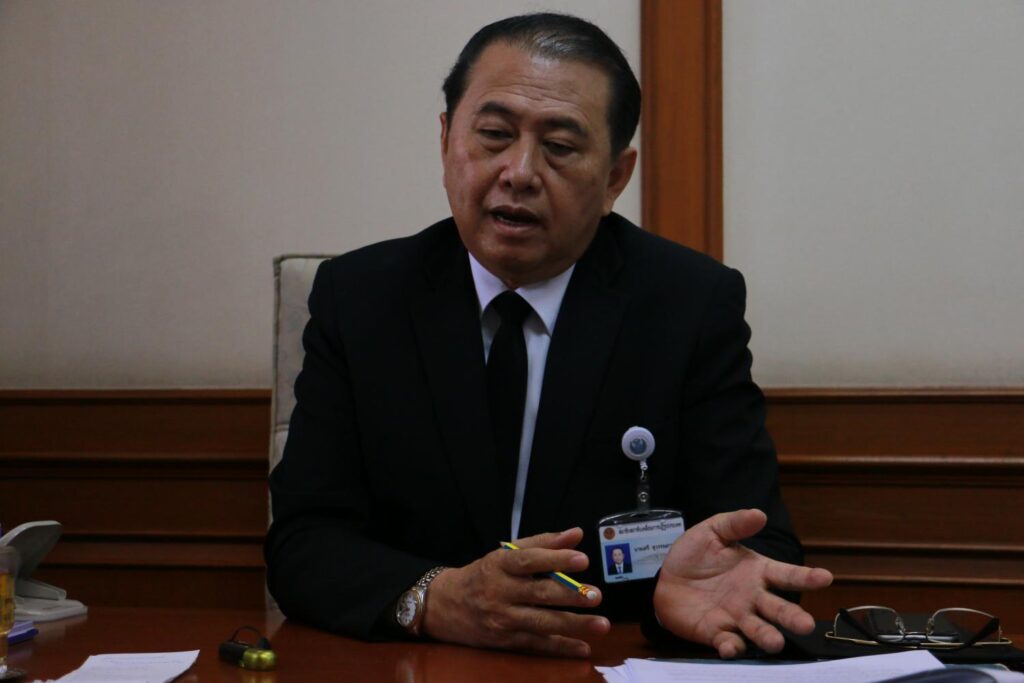
Mana Nimitmongkol, secretary-general of the Anti-Corruption Organisation of Thailand, also pointed the finger at position-buying among police and attempts to curry favour with their superiors as major problems that need to be addressed.
Another from 19 June 2026
Boy held for murder of girlfriend whose body found in rubbish bin
What motive did the 16-year-old suspect claim for the murder?
The 16-year-old suspect claimed that he committed the murder out of jealousy.
Specifically, during questioning, the teenager allegedly admitted to killing his 17-year-old girlfriend after he became jealous upon seeing her talking with another man.
The investigation into the death of the young woman began after her body, which featured long red hair and extensive tattoos on her back, was discovered in the Klaeng district of Rayong.
Police believe the victim was killed elsewhere before being dumped in the bin in an attempt to hide the crime.
Following the discovery, authorities were able to confirm the victim’s identity through her tattoos and the subsequent identification by her parents.
About Matt Owens Rees
https://understanding-thailand.com/about-me-2/
© Matt Owens Rees June 2026
The content and final editing remain my own.