Bunkhun, blood ties, and why your Thai partner will always put family first
You Marry Family in Thailand

Introduction
I’ve lived in Thailand for twenty years. First in Bangkok, then in Chiang Mai. As a cultural anthropologist, I’ve watched dozens of western men, and quite a few Western women, get together with Thai partners.
Almost all of them thought the same thing. They believed marriage is a deal between two people. It’s not. Whether you’re a man or a woman, when you get serious with a Thai national, you marry the family.
Your partner’s first job will be to look after their blood relatives financially. That doesn’t mean they don’t love you. It doesn’t mean they’re not committed to you. It means their commitment to family is the most important thing they have. Ask them to pick between you and their mother. You will lose.
Understand that before you get married, and you’ve got a real shot at making it work. This isn’t me criticising Thai culture. It’s just what I’ve seen. Some marriages work really well across this divide. Others fall apart.
The difference, almost every time, was whether the Western partner knew before the wedding that they were marrying a family, not just one person.
Now let’s get into this complex story
Blood vs. Marriage
In most western countries, your main family is you, your partner, and your kids. When you get married, your husband or wife becomes your closest person. Your parents and brothers and sisters move down a notch.
In Thailand, it’s the opposite. Your blood family – mum, dad, siblings, even cousins a lot of the time – stays as your number one for life. Your husband or wife? Respected, yes. But they’re in second place.
I once talked to a Thai grandmother in Khon Kaen province. She had seven children. I asked which one she loved most. She laughed. “All same“, she said. Then I asked about her eldest daughter’s husband. She paused for less than two seconds then said in her broken English (Tenglish):
“If he help us, he family. If he no help us, he not family.“
That got me thinking. Blood family is unconditional. A foreigner marrying into a Thai family is not. Westerners find this hard to get their heads around. We grow up thinking marriage creates a brand new top-tier bond. Thais grow up thinking marriage adds a useful person to the existing family network.

Neither is wrong. They just don’t mix well unless both sides accept the difference. So if you’re a western husband or wife with a Thai partner, you take on the job of helping your partner’s blood family. But you don’t get the same loyalty that blood relatives get. That’s not mean. That’s just how family works here.
Repaying Parents – Bunkhun
To understand why Thais send money home all the time, you need to know about bunkhun (คุณพระคุณ). There’s no good English word for it. People call it “gratitude” or “debt of kindness”, but it’s much stronger than that.
Bunkhun is the moral duty a child has to pay back their parents for raising them. It’s not a choice. It’s not a suggestion. A Thai person who doesn’t repay bunkhun loses face, loses merit, and their community thinks less of them as a human being.
I spoke with a Thai university professor who studied in America
She was married to an American and spoke perfect English. She knew both cultures inside out. I asked if she sent money to her parents in Udon Thani. She said yes. I asked how much. She told me.
Then I asked, “What would happen if you stopped?” She looked really uncomfortable. “I would not stop,” she said. “They raised me. They sold land to send me to university. I owe them my life.”
That’s bunkhun.
In western families, kids often help parents out of love or duty, but you can negotiate it. In Thailand, you can’t. The amount might change. The timing might change. But you have to do it. So your Thai partner will send money home. That’s not a warning sign. It doesn’t mean they love you less. It means they’re a normal, decent Thai person.
As the farang (foreign) partner, you’ll end up topping up whatever your partner gives to their parents each month. If they need 10,000 baht for medical bills and your partner only has 4,000, you’re expected to give the other 6,000.
If their brother needs a new motorbike to get to work, you’re expected to help. If the family roof needs fixing after the rainy season, you chip in.
Western men grow bitter about this. They feel used. They feel their love is being priced. But from a Thai point of view, they’re just doing the job they signed up for when they joined the family.
If you didn’t want that job, don’t marry into a Thai family. And it’s not a secret. People talk about this openly before weddings. It’s just that they often say it in Thai, while the foreign partner smiles and nods without really understanding.
The Farang as the Family Bank
Thailand has a pretty good economy, but it also has huge income gaps and almost no safety net. Old poor people rely on their kids. Unemployed people rely on their brothers and sisters. People in debt rely on anyone who will help.
When a Thai family has a money crisis, they look first at the person with the most cash. Very often, that’s the farang husband or wife.
I’ve kept notes on forty-three Western-Thai marriages over twenty years. In thirty-one of them, the western partner became the family’s main lender within two years. In twenty-two of those cases, the money never got paid back. In nine cases, the westerner said from the start that the money was a gift – and those marriages tended to be happier. The problem came from pretending loans would be repaid.
Thais use loan sharks and payday loans because bank credit is hard to get, especially in the countryside. Interest from unofficial lenders can be 20% per month. When a family gets deeper into debt and can’t pay, the obvious answer – to them – is the farang partner. You’re seen as rich. You have money, they don’t. And because you’re family now, asking you is no different from asking a brother or cousin.
A Short Note on Thai Loan Sharks
https://www.nationthailand.com/thailand/general/40033136
Here’s the thing that many westerners miss. The word “loan” is often just being polite. Your partner’s mother might say, “Can we borrow 50,000 baht? We’ll pay you back after the rice harvest.” She knows, and your partner knows, that the harvest won’t cover 50,000 baht. The word “borrow” saves face. It lets them ask without the shame of begging. But if you take the word literally, you’ll wait years for money that never comes.
The smarter way – and I’ve seen this work – is to decide upfront what you can afford to give. Give it freely with no strings attached. Say no to anything beyond that. Do it politely, with grengjai (the reluctance to impose), but be firm.
Thais understand limits. What they don’t understand is a farang who says yes resentfully and then complains later.
Sons vs. Daughters
One of the clearest patterns I’ve seen over twenty years is how differently Thai families treat sons and daughters. It’s changing slowly in educated city families, but in the countryside and working class, the difference is stark.
Daughters are raised to be responsible. They’re expected to care for parents in old age. They’re expected to send money home. They’re the reliable ones. They won’t disappear when things get hard. That’s why so many Thai mothers prefer daughters. A daughter is a pension plan. A son is a gamble.
Sons, on the other hand, are spoiled. I’m not judging. I’m just telling you what I’ve seen. Thai parents, especially mothers, often indulge their sons more than their daughters. Sons get more freedom, fewer chores, less money responsibility. So many Thai sons grow up thinking help will always be there.
I remember one family in Buriram province. The son had lost three motorcycles in two years. Each time it was gambling debts. Each time his mother bailed him out. Then she turned to her daughter’s farang husband to top up the family savings.
The daughter was furious. The mother was sorry but firm. “He my son,” she said. “He no lose face.”
The son felt no shame at all. He told me, “My mother loves me. She will always help.”
Meanwhile, a daughter in debt will often work two jobs, sell her gold, or do without before asking for help. When she does ask, it’s usually for her parents, not for herself.
The western husbands I’ve talked to say they rarely mind helping their wives directly. What they mind is helping a brother-in-law who doesn’t even try to help himself. That’s a fair frustration. Thai sons often have a mai pen rai (“never mind, it’s fine”) attitude to their own money problems. They don’t feel the same rush to stand on their own feet because no one ever made them. Their sisters never had that luxury.
https://thailandfoundation.or.th/understanding-mai-pen-rai/
So as a farang husband, you’ll probably find that your wife is much better with money than her brother. That’s not an accident. That’s how each of them was raised.
The Wedding vs. The Paperwork
Westerners tend to think the legal registration makes the marriage. In Thailand, that’s not really true. The family and community see you as married after the ceremonial wedding – the phasuk or khan maak procession – because everyone has seen it and recognised it.
The Khan Maak Procession
https://www.youtube.com/channel/UCEnkg6VxRZQuPCrWaPQQtvw
Over the years, I’ve been to dozens of these ceremonies. They’re beautiful and elaborate and mean a lot to Thais. The groom walking to the bride’s house. The symbolic gates. The rings. The water poured over the couple’s hands. The blessing from the elders. These rituals carry way more social weight than a signature at the amphur (the district office).
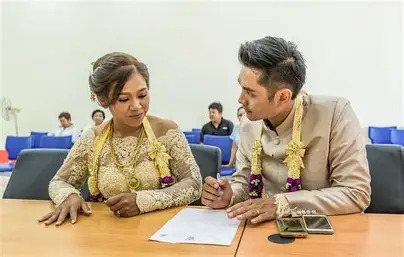
In the family’s eyes, it doesn’t matter if you did the legal registration. If the ceremony happened, you’re married. The community will treat you as married. Your partner’s family will expect you to act like a spouse. And if you leave later, they’ll treat it as a divorce, no matter what the paperwork says.
The registration at the amphur, if it happens at all, is usually quiet. Just the couple goes. They sign some papers. They pay a small fee. They leave. For Thais, this is just admin. For Westerners, it’s the only part that feels real. That mismatch has caused endless confusion.
Some farang husbands who lived with a Thai partner for years, went to all the family ceremonies, paid into family costs, and thought they were married – only to find out when they split up that they had no legal rights because they never registered.
There are farang husbands who registered but skipped the ceremony. The family treated them like a boyfriend, not a husband. My advice after twenty years of living here? Do both. The registration protects your legal rights. The ceremony protects your standing with the family. Neither is enough on its own.
Family Help: West vs. Thailand
Western families will help a brother who loses his job, but usually as a last resort. First he should look for work. Then use his savings. Then cut his spending. Then ask family. There’s a small amount of shame in taking family money. It feels like failure. Western men especially are raised to be self-reliant. The ideal is to stand on your own two feet and never ask.
In Thailand, family ties are so strong that a brother who loses his job just assumes the family will step in. It doesn’t even cross his mind that he should try everything else first. There’s no shame at all. Refusing family help would be strange and disrespectful – like rejecting their love.
I once talked to a Thai man in his thirties. He’d been supported by his older sister and her farang husband for four years while he “looked for work”. He hadn’t really tried to find a job. When I asked him about it, he looked genuinely confused. “My sister loves me,” he said. “She wants me to be comfortable. Why would I suffer when she can help?“
He wasn’t lazy in the western sense. He just had a different idea of what’s acceptable. As your wife’s husband – legally married or not – you’re seen as part of the family when it comes to helping her brother. You can’t say he’s not your problem. The family won’t accept that.
But here’s the twist. You’re also seen as the rich westerner, so you’ll be expected to pay for any service he gives you. If he helps fix the fence or drives you to the market, the family will expect you to pay him. Giving back has its limits. You give freely to them. They accept, but they don’t always give back equally.
That bothers westerners. We believe in fairness. Thais believe in rank and hierarchy. You have more money, so you give more. That’s not unfair to them. That’s just how the world works.
The Fabric of Thailand
The family is the fabric of Thailand. I don’t mean that as a fancy phrase. It’s not just one piece of life. It’s how Thais see right and wrong, duty, identity, and the whole point of living. To be a good person in Thailand is to be a good family member. There’s no separate way to be a good individual.
Western values are different. We push our kids to be independent. To move away for school or work. To start their own homes. To visit occasionally on holidays instead of always being in the parental home.

Thai kids stay close to their families for life. A Thai adult who moves to another province will call their parents every day. One who moves to another country will send money every month. That’s not duty without love. It’s love shown as duty.
No one way is better. The western way gives you self-reliance and new ideas. The Thai way gives you security and belonging.
The trouble starts when a westerner tries to live by western rules inside a Thai family. That won’t work. The family won’t change for you. You either adapt or you leave.
Some western men adapt beautifully. They set clear limits on what they’ll give. They learn to say no kindly. They accept that they’ll never fully get bunkhun, but they respect it anyway. They stop expecting loans to be repaid. They treat the family’s requests as just part of being with someone they love.
And over time, the family starts to see them differently. Not just as a farang with money, but as a real relative. That takes years. It doesn’t happen overnight. But I’ve seen it happen.
The ones who fail are the ones who fight the culture. They refuse to help. They demand that their partner choose between them and their parents. They keep a list of loans and demand repayment. They complain that Thai families are greedy. Those marriages almost always end. And they end badly.
You don’t have to love every part of Thai family culture. I don’t love every part of it myself. But you do have to accept it as real. It’s not going anywhere. And if you want to build a life here with a Thai partner, you’ll build it inside that culture, not outside it.
———————
If you want a deeper look at sin sot and what westerners misunderstand about Thai weddings, take a look at my post
https://www.understanding-thailand.com/marrying-in-thailand-a-different-angle/
My series, Escape to Thailand, tells the story of Derek and Toy. From a relationship which started on an internet dating site to a very unexpected ending.
https://understanding-thailand.com/escape-to-thailand-the-full-series/
The First in the Series. Derek leaves for Thailand but starts having doubts
https://understanding-thailand.com/were-airborne/
The content and final editing remain my own.