

Does Artificial Intelligence Need to be Controlled
Is Artificial Intelligence Uncontrollable
Ironically, while AI is often portrayed as uncontrollable, it can identify problems and suggest solutions where human help-lines fail.
A personal example: when I tried to send a WhatsApp message to France, WordPress displayed an error claiming my contact didn’t exist. Copilot AI produced a thorough overview of possible causes, 4 pages of text, but trusted that error message blindly and went off on a wild goose chase. WordPress’s human help-line failed to deliver a solution.
My French contact was there all along.
What Does AI Look Like
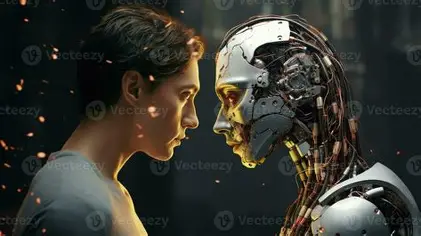
AI is not a robot you meet face-to-face. You send a message, and it responds in a conversational style. You can accept what it writes, or engage in dialogue. The result can be used directly in your blog or website, or adapted to your taste. Usually, you will have to edit AI’s suggested result to ensure it doesn’t stray too far from your original post.
So, is Artificial Intelligence Uncontrollable or is it not the problem it’s made out to be?
Examples: UK, USA, France, Thailand
United Kingdom: AI highlights economic causes and points to social tensions, while politics and media often avoid the issue.
It identified the inability or unwillingness of the UK Parliament to stop gang rape by Pakistani immigrants, the imposition of cancel culture, and the outlawing of free speech.
University professors were sacked for expressing views which were against Labour government policy. Even during peaceful protests, ordinary citizens were imprisoned for stating their honestly held views in public.
They were denied the Free Speech that had been incorporated in the Constitution for centuries.
Is that because of vested interests? Is Prime Minister Starmer and the government soft-pedalling on the rape enquiry, for example, because they don’t want to risk losing votes in constituencies where there are high numbers of Pakistani voters.
United States: AI explains why tariffs don’t work: costs are simply passed on to consumers. Yet politicians and media continue to claim otherwise.
The money from tariffs does not go to the American treasury as Trump, a human, claims. The tariffs are added to the costs of the goods that Americans buy when they purchase goods subjected to tariffs.
The US supreme court has overturned the President’s tariff regime, saying that only Congress can impose such taxes. It’s not in the gift of US presidents.
Few podcasts explain, in an unbiased way, how tariffs work. Interviewers appear not to want to ask relevant questions.
France: AI clarifies that Macron had to reverse his pension reform due to public pressure—not by parliamentary debate, but by protests outside government buildings, and at road blockades. French people have a distaste for authoritarian feudal government.
As in the time of Louis IV, when the French people used Madame Guillotine to restore democracy from feudal rule, they now block roads and engage in protests. Not the best way, but it works.


Thailand: The colors of the flag symbolize nation (red), monarchy (blue), and religion (white). The current situation in the country shows how deeply tradition and politics are intertwined.
Red → Represents the nation and the blood of the Thai people, symbolising their sacrifices and unity.
Blue → Symbolises the monarchy, showing loyalty to the King. The central blue stripe is twice as wide as the others, emphasising the monarchy’s importance.
White → Stands for religion, specifically Buddhism, which is the spiritual foundation of Thai society.
However, 60% of Thais voted, in the February 2026 elections, for changes in the military-drafted Constitution. While Thais respect the King as the father of the nation and head of state, they want a government elected by the people.
Closing Thoughts
Can we really claim Artificial Intelligence Is Uncontrollable? AI can sometimes reveal the core truth, while humans and media gloss over details or present one-sided views.
This raises the question: should we control AI, or should we learn from the mirror it holds up to us?
I use AI as a research tool. It’s very powerful in that role since it has huge databases. However, be careful when asking it to “improve” your text by making it more readable, perhaps using a humourous or more casual tone.
Often, AI gets carried away in its own excitement in its desire to “improve”.
In my experience, AI can sometimes introduce text that is not relevant to your post, confusing readers who note that the remarks introduced by AI have nothing to do with the original text.
AI can delete important points in your message in its efforts in “improving” your text. For example, in this post it removed all reference to Pakistani rape gangs in the UK. As it’s currently a central issue and concern for the people of the UK, I put it back in.
AI seems to be over cautious and unwilling to write on sensitive but true issues. That’s a pity because people can then easily lose trust in the whole concept of AI, which I believe could, overall, be a force for good in the world.
French Revolution – Wikipedia
And here’s something I wrote about today’s politicians. It’s not just about Thailand.
Today’s Politicians – Understanding Thailand
Comments, agreeing or disagreeing, are always welcome. Go to my Comments Box to make your views known.